IN SEARCH OF DONALD SIMPSON BELL VC

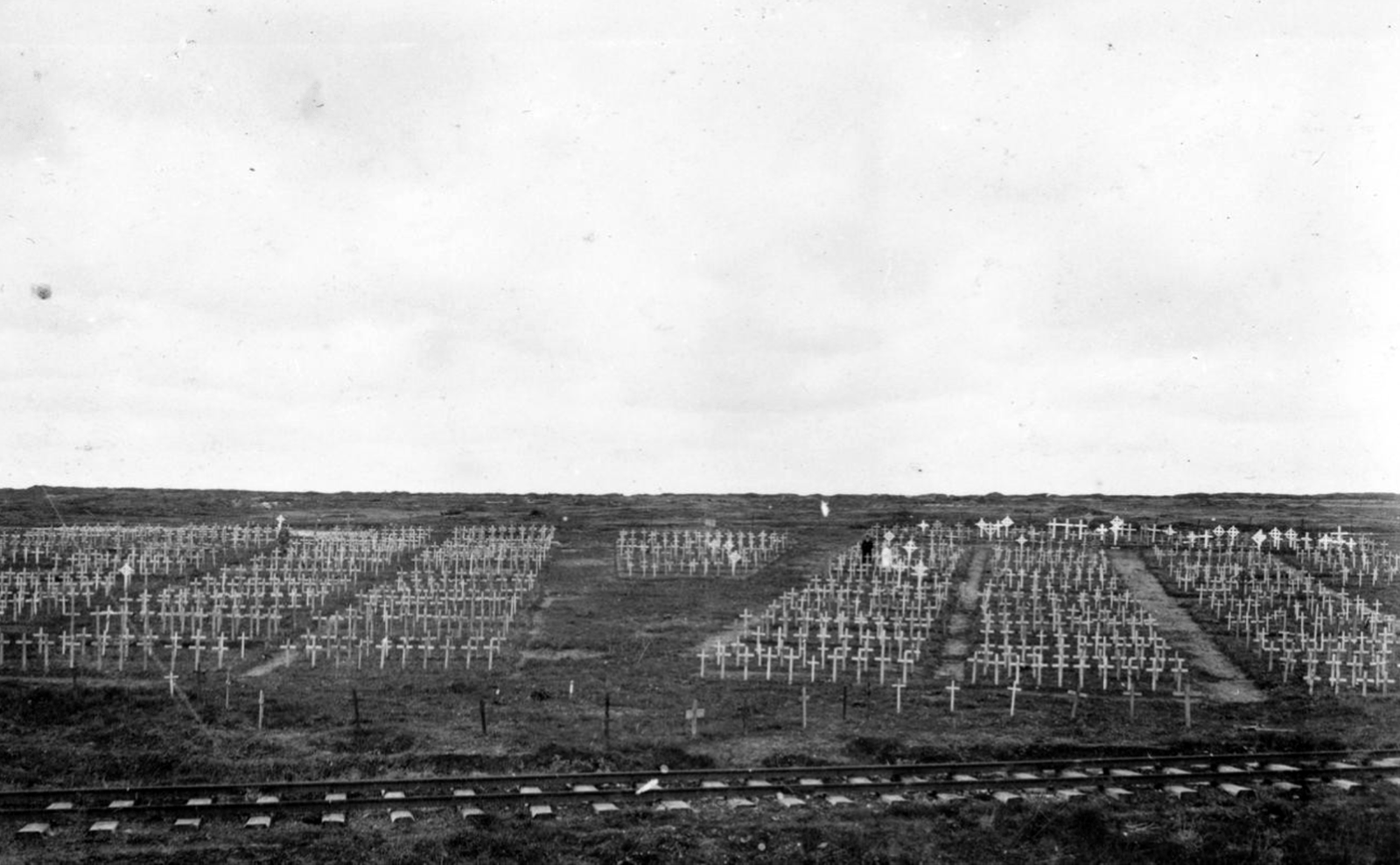
On an overcast day in July 1919, soldiers of the 21st Labour Company exhumed several bodies from a field on the south-eastern edge of Contalmaison and transported them one mile west for reburial at Gordon Dump Cemetery. Among the remains was a second lieutenant of the 9th (Service) Battalion, Alexandra, Princess of Wales’s Own (Yorkshire Regiment) – Donald Simpson Bell – who had been killed in action during the bitter fight to capture the French village three years earlier.
There was a poignant symmetry to Bell’s reburial. His new resting place lay within a few hundred yards of Horseshoe Trench, a former German position where the young subaltern had dashed across the open with two of his men to destroy an enemy machine gun just five days before his death on 10 July 1916. It was an act of extraordinary bravery that would eventually see the 25-year-old awarded a posthumous Victoria Cross.
A professional footballer with Bradford Park Avenue and once on the books of Newcastle United, then one of the most successful clubs in the country, Bell’s story is among the most compelling of the 627 men awarded Britain’s highest award for gallantry during the First World War.
Yet for much of the past century, attention has focused almost exclusively on those two aspects of Bell’s life. While perhaps understandable given football’s immense popularity, it has produced a narrative shaped as much by romanticised half-truths as by established fact. Historical inaccuracies have been repeated, embellished and accepted as truth since his death on the Somme, leaving an extraordinary life only partially revealed. It was this realisation that inspired me to write this book: to separate fact from fiction and tell the story of Donald Simpson Bell VC as fully and faithfully as possible.
As any author will attest, writing a book involves much more than sitting at a keyboard. Over the past few years I have travelled the length and breadth of the country, visiting archives, libraries and museums in search of original source material. My research has taken me from the pristine reading rooms of The National Archives at Kew to the quiet – and sometimes not so quiet – corners of local libraries and county record offices. I have spent countless hours poring over fragile documents, dusty war diaries, trench maps, military orders, faded photograph albums and old newspapers, searching for every piece of the jigsaw, however small or obscure.
It soon became apparent that, once you scratch beneath the surface, there is a considerable amount of material to be found – if you only know where to look.
The Victorian spa town of Harrogate, where Bell was born and raised, lies at the heart of the story. It was the centre of his world, the place from which the defining influences of his early years emerged. His education, his family’s Wesleyan Methodist faith, his earliest friendships, and his development as both an athlete and a scholar were all shaped by the character and values of this picturesque town in the West Riding of Yorkshire.
Much of the Harrogate Bell knew remains remarkably unchanged: the striking Wesley Chapel on the corner of Cambridge Street and Cheltenham Crescent, where Don and his siblings sang in the choir; its former Sunday school, now home to an Indian restaurant, where he received his religious education and later taught himself; Starbeck School, where he took up his first post as a schoolmaster after returning from his studies in 1911; and the family home, Milton Lodge, situated on East Parade. Wandering the quiet streets between these familiar landmarks offers a tangible connection to Bell’s world.
Harrogate became something of a second home during my research, while Bradford, Sheffield and York featured regularly in my travels. So too did the historic market town of Richmond, home to the Green Howards Museum, which holds several of Bell’s personal artefacts. Among them is the battle-damaged steel helmet he was wearing when his life was cut tragically short at Contalmaison 110 years ago. To hold the helmet, little more than a week after standing at his grave, was a deeply moving and poignant experience.
Another important chapter in Bell’s life began when he moved south to begin teacher training at Westminster Training College in 1909. Although its original premises on Horseferry Road closed in 1959, Westminster’s archives were preserved and transferred to Harcourt Hill when the college relocated to its present site at Oxford Brookes University. That facility has sadly since closed, but I was fortunate enough to explore its remarkable collection before it did so. The visit provided a rare insight into Bell’s two years as a student, revealing a young man who flourished both academically and within London’s thriving collegiate sporting circles.
The modern-day institution has not forgotten the 102 Westminsterians who lost their lives during the First World War. An impressive memorial, transferred from Horseferry Road, records their names on two large oak tablets alongside those of a further 25 former students who were killed during the Second World War. The memorial now occupies a prominent position at the entry to the chapel at Harcourt Hill, close to a beautiful stained-glass window dedicated to Bell that was unveiled in 1921.
My research has taken me further afield too. I have been making regular pilgrimages to the battlefields for almost four decades, but in recent years my focus has narrowed to the ground around Contalmaison. There is simply no substitute for walking those fields and quiet country lanes – trench map in hand – in an effort to understand the landscape as Bell and the men of his battalion experienced it. Every visit has revealed something new. Features that had barely registered on previous walks suddenly assumed fresh significance. Just when I thought I knew the area, more of its secrets were revealed, deepening my understanding of the events that took place there during those balmy July days of 1916.
Yet, as invaluable as those experiences have been, arguably the single most important source for this book came not from an archive, but from Bell’s family themselves. I had the pleasure of meeting Don’s relatives at the very beginning of this project and it is no exaggeration to say that the book would not have been possible without the trust and generosity they showed me from the outset. Following what was, at least on my part, a slightly nervous explanation of what I hoped to achieve as a stranger writing a book about their relative, they welcomed me with open arms – and with no shortage of cake, sandwiches and cups of Yorkshire tea.
More importantly, they granted me unrestricted access to an extraordinary collection of family letters, photographs and personal papers. It was an act of faith that I never took for granted, and one for which I shall remain eternally grateful.
Don was a prolific letter writer, as were his brother and five surviving sisters, and their correspondence became the foundation of this book. The letters opened a fascinating window into Don’s character, revealing his dry sense of humour, warmth, ambition and occasional anxieties in a way that no service record or contemporary newspaper ever could. More than anything else, they peeled away a century of myth and cliché, allowing me the rare privilege of getting to know not only Don, but also the close-knit Bell family and the Wesleyan faith that shaped their lives.
Writing this biography has been an immense privilege, but also a profound responsibility. I hope readers will come away with a deeper understanding of Donald Simpson Bell beyond his extraordinary courage and tragic death on the battlefield. If this book succeeds in revealing the man behind the Victoria Cross, then I will have achieved the objective I set myself at the very beginning of this journey.
‘The Story of Donald Simpson Bell VC – Football’s War Hero’ is available to purchase now here.